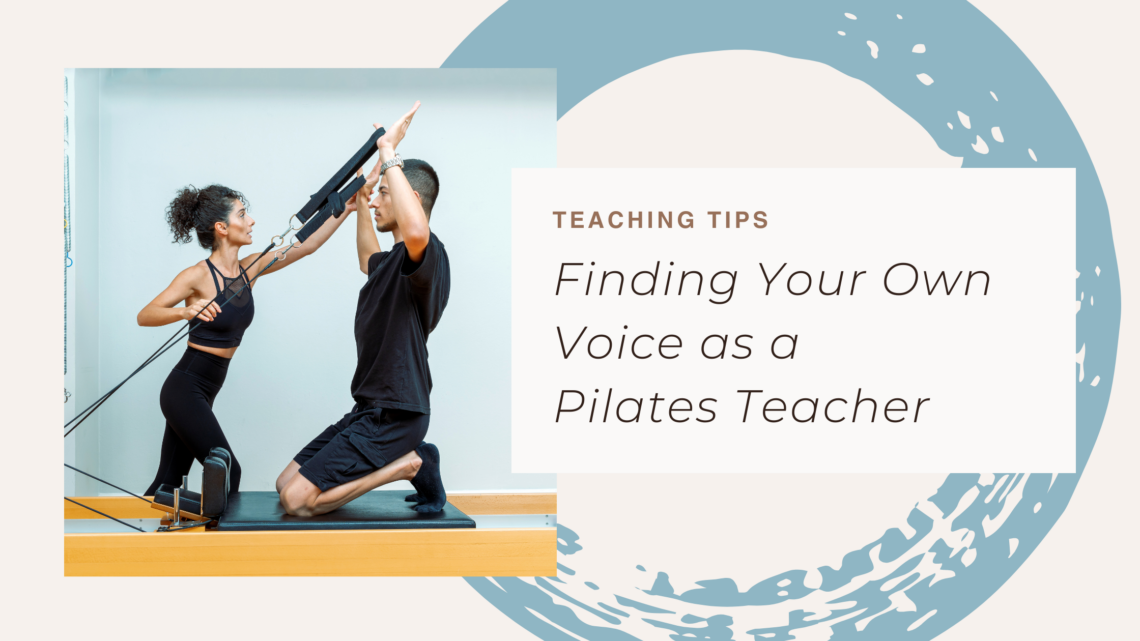
Finding Your Own Voice as a Pilates Teacher
Borrow the Wisdom. Then, Make It Your Own.
Lately, as a personal practice, I’ve been spending some time with heart-brain coherence meditations.
It’s still a newer practice for me, and I wouldn’t say I’m “good” at it yet, but something about it has been helping me come back to myself in a deeper way.
Not in a loud or dramatic way. More like remembering something I already knew, but had maybe been too busy, too tired, or too externally focused to hear clearly.
It’s been bringing me back into my heart. Back into my own truth. Back into a quieter kind of inner knowing that doesn’t always speak first, but usually feels the most honest when I give it space.
And it made me think about teaching. Mostly, our teaching voice.
The Natural Stage of Teaching Like Someone Else
When we first become teachers, so much of what we do is borrowed.
We borrow language from our mentors. We borrow pacing, sequencing, imagery, preferences, and even the way we define what a “good” class should feel like.
That’s not wrong.
In many ways, that’s how we learn.
We absorb. We imitate. We practice. We refine. We begin to understand not only what our mentors are doing, but why it works.
There is wisdom in that stage.
There is value in listening closely, watching carefully, and allowing ourselves to be shaped by the teachers who came before us.
But at some point, teaching asks us to come back to ourselves.
When Your Teaching Starts to Become Yours
Eventually, we begin to ask different questions.
→ What do I actually believe about movement?
→ What do I notice in bodies?
→ What pace feels natural to me?
→ What kind of support do I want my clients to feel?
→ What words sound like mine?
→ What choices feel aligned with how I see movement, people, learning, and growth?
These questions matter because your teaching voice is not just a collection of cues, exercises, or class plans.
It is shaped by your values. Your body. Your lived experience. Your way of seeing people. Your relationship to movement. Your ability to listen, respond, and guide.
Our mentors can shape us, and they should. That wisdom matters.
But eventually, our teaching has to become our own.
Borrow the wisdom. Then, make it your own.
Coming Back to Your Own Voice
This is something I’m sitting with in my own life right now, too.
Not just in teaching, but in the way I’m returning to my work, my energy, my rhythm, and my own inner guidance after stepping out of the spotlight for a while.
It is easy to look outside ourselves for the “right” way to do things. The right pace. The right words. The right teaching style. The right business rhythm. The right version of success.
And sometimes, outside guidance is helpful.
But if we are always looking outward, we can lose touch with the quieter wisdom inside us.
The part that knows when something feels aligned.
The part that knows when we are performing instead of teaching.
The part that knows when we are trying to sound like someone else instead of letting our own voice come through.
How to Start Finding Your Own Teaching Voice
Finding your own voice as a teacher doesn’t usually happen all at once. It happens slowly, through practice, reflection, and noticing what feels true while you teach.
One place to begin is by paying attention to what already feels natural. Notice the words you use when you are not trying too hard. Notice the pace that helps you stay present. Notice the kinds of cues your clients respond to most easily. Notice what you care about most when you watch people move.
You can also begin to question what you’ve inherited. Are there phrases you use simply because your teacher used them? Are there class structures you repeat because they feel familiar, even if they no longer feel aligned? Are there ways you try to sound “professional” that actually pull you away from being clear, warm, or helpful?
This doesn’t mean throwing away what you learned. It means becoming more conscious about what you keep, what you adapt, and what you’re ready to release.
A helpful practice is to ask yourself after teaching:
What felt like me today?
What felt forced?
Where did I feel most connected to my clients?
Where did I feel like I was performing?
Over time, these small reflections help you recognize the difference between borrowed teaching and embodied teaching.
Your voice is already there. The work is learning to hear it, trust it, and let it come through with more clarity.
Want Help Creating Your Signature Teaching Style?
If this is something you’re actively exploring in your own teaching, my workshop Create Your Signature Teaching Style was designed to support exactly this process.
Inside the workshop, you’ll begin clarifying what makes your teaching feel like you — including your values, preferences, strengths, communication style, and the kind of experience you want your clients to have in class.
It’s not about creating a brand persona or forcing yourself into a niche. It’s about understanding the qualities that already make your teaching distinct, so you can show up with more clarity, confidence, and consistency.
You can learn more and sign up here: Create Your Signature Teaching Style
A Reflection for Teachers
This is an invitation to notice where you may still be trying to teach like someone else.
Not because you did anything wrong.
Not because your mentors failed you.
Not because you should have figured it all out by now.
But because part of growing as a teacher is learning to recognize what is truly yours.
Where are you borrowing language that no longer feels natural?
Where are you teaching at a pace that doesn’t match how you actually observe and respond?
Where are you measuring yourself against a version of “good” that may not belong to you?
Where are you ready to trust your own eye, your own voice, your own values, and your own way of holding space?
Your voice matters.
And sometimes the next layer of growth isn’t adding more.
Sometimes it’s listening closely enough to recognize what has been yours all along.

Ginny Massie
Ginny Massie breaks down the complexities of teaching movement for heart-centered Pilates instructors so they can help their clients get big results. Her trainings offer formulas and strategies that simplify dynamic concepts, are easy to follow, and FUN! Get the free PDF "5 Biggest Cueing Mistakes Pilates Teachers Make - And What To Do Instead" Guide Here